

The Human Side of Email Marketing: A No-Nonesene Guide
Spend any amount of time looking into marketing your business and within 15 minutes you're drowning in tips and tricks and strategies.
It's easy to get stuck in analysis paralysis or worse — jumping from strategy to strategy faster than a toddler hopped up on Halloween candy in a toy store.
Bouncing from one shiny object to the next, never giving anything enough time to actually work.
And while there's a reason a lot of these super duper, "next big thing!" strategies work (because they did for at least one somebody), there's one very important thing too many people forget when it comes to marketing:
People.
You are a person trying to provide value to another person.
Let's sit with that for a moment.
Behind every email open, every click, every purchase is a real human being who has hopes, dreams, and probably a growing pile of laundry they're avoiding by reading your email. (Don't we all? 😅)
And this human-to-human connection is why email marketing still rules over flashier channels.
It's also why the most successful email marketing isn't about fancy automation or "ninja" tactics. It's about creating genuine connections.
I mean, when was the last time you got excited about an obviously automated, personality-free email? *crickets*
How Often Should You Email Your List? Here's the Real Deal
Look, you've probably heard "email every day!" from some of the marketing gurus out there.
And while daily emails work, here's the truth:
The best email frequency is one you can consistently maintain while providing actual value to your audience.
Think about it.
Would you rather get 7 mediocre emails a week or 2-3 really good ones that make you think "Wow, I'm glad I opened that!"?
Here's a solid starting point:
- 2-3 times per week for regular content
- Increase frequency during launches/promotions
- Scale up or down based on your audience engagement (they'll tell you through their open rates!)
But remember, what works for a fast-paced tech company might bomb for a thoughtful wellness coach.
The only way to know your sweet spot?
Testing!
Test different frequencies and actually pay attention to your metrics.
Your audience will tell you what they prefer through their opens, clicks, and replies. And honestly, sometimes outright tell you.
The key isn't frequency — it's consistency and quality.
Pick a schedule you can stick to without burning out or sacrificing value.
And if you find yourself spending hours on a single email, overthinking might be your real problem… not frequency.
Balancing Sales and Value Emails: The Secret Sauce to Email Success
Now let's talk about the elephant in the inbox...
How do you sell without being that annoying person who only calls when they need something?
We all have that friend. Don't be that friend.
Going back to the "people" aspect, think about it like your bank account.
If you keep taking and taking and taking but never making a deposit, with a zero balance... or worse unwelcome overdraft notices.
Keep trying to take from the people on your list and you'll at best, exhaust them. At worst, end up with some very angry emails before they unsubscribe.
Here's the deal:
Your email strategy needs to be like a great television series — mostly engaging content that keeps people coming back, with enough "commercial breaks" to keep the lights on.
Let's break this down into bite-sized pieces that you can actually use.
1. Know Your Audience (Because Mind Reading Isn't a Thing... Yet)
Look, your subscribers signed up for a reason, and it wasn't just to get bombarded with "BUY NOW!" messages.
They're looking for solutions, entertainment, or maybe just a friendly voice in their inbox.
Give them what they want, and they'll stick around for what you need to sell.
2. The 80/20 Rule (Your New Best Friend)
Here's a not-so-secret secret: aim for 80% value and 20% sales in your email mix.
Think of it like a great party — if you spend the whole time trying to force them to look at countless pics from your last day trip at the beach, people will start making excuses to leave.
But if you're the host with the most (value), they won't mind the next sale pitch.
And might even be excited about it because you are offering something they need.
3. Value Emails That Actually... You Know, Provide Value
Let's get specific about what "value" really means:
- Share those ninja-level tips that make you look like a genius
- Tell stories that make people think "OMG, that's so me!"
- Curate awesome resources (because who doesn't love a good shortcut?)
The secret to value emails that people actually want to read?
Write them like binge-worthy content using storytelling techniques that keep readers engaged from the first line to the last.
But... but... but... The gurus are saying value emails are dead!
Yep, that's in A LOT of ads lately. And guess what?
Get on their lists and you'll see they are still sending out (and providing) value emails.
4. Sales Emails That Don't Make People Cringe
When it is time to sell (because hey, we're running businesses here), make it count:
- Package your pitch in a story (hello, story-driven email templates!)
- Show real results from real people (nothing sells like stories of proof)
- Address objections before they come up (yes, you're psychic now)
5. Timing Is Everything (Like Comedy, But for Sales)
Who proposes on the first date?
Same goes for email marketing.
Space out your sales emails between value-packed content.
Your subscribers will actually look forward to hearing from you instead of playing hide-and-disappear forever with the unsubscribe button.
6. Watch Those Numbers (But Don't Obsess)
Keep an eye on your metrics. They're like your email marketing report card.
Are people opening your emails? Clicking through? Buying stuff?
These numbers tell you if you're hitting the sweet spot or if you need to adjust your recipe.
7. Ask Your People What They Want (Revolutionary, Right?)
Here's a crazy idea. Why not just ask your subscribers what they want to see in their inbox?
It's like having a focus group at your fingertips, minus the awkward one-way mirror setup.
Every great email starts with a strong hook
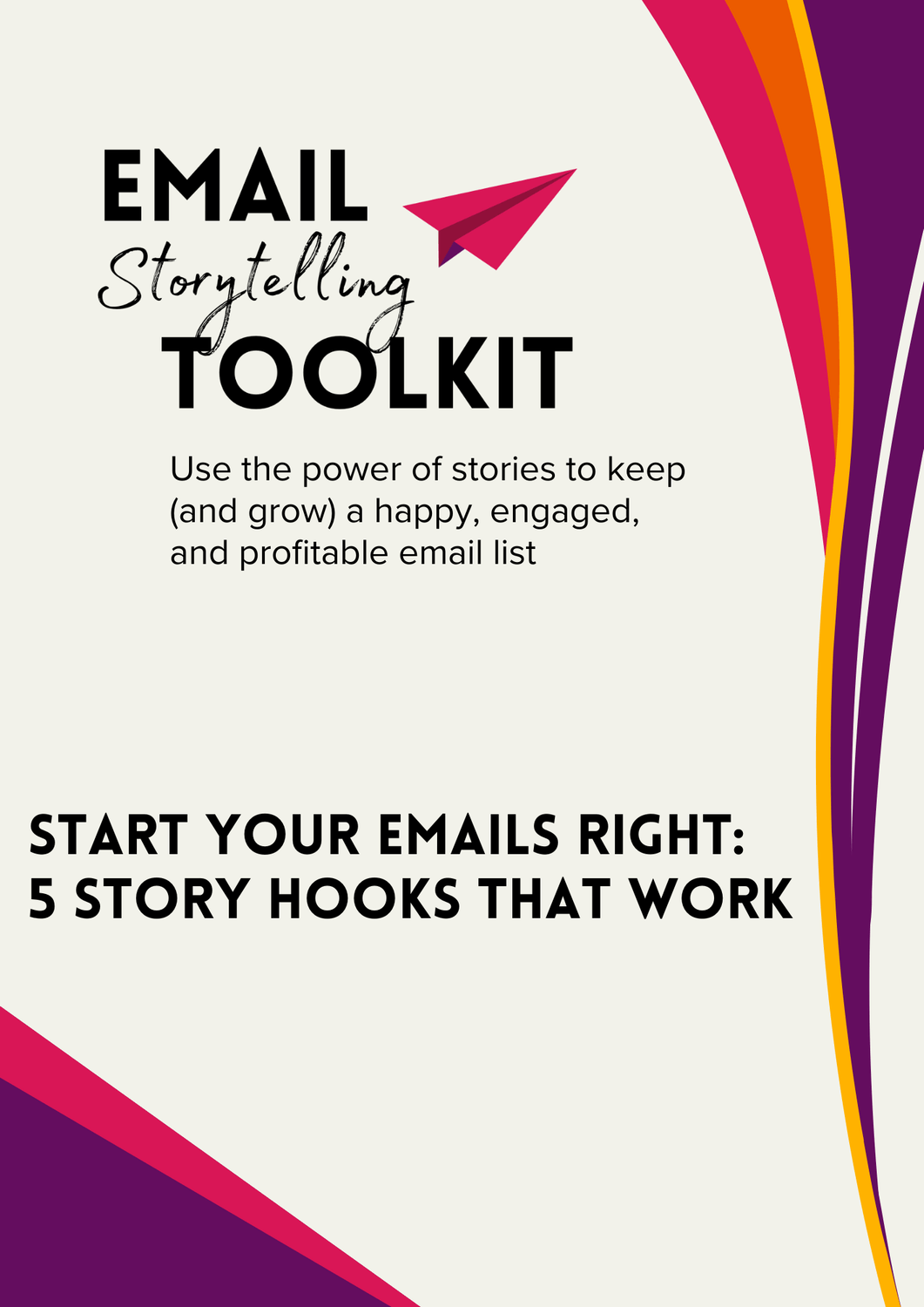
Get your free guide:
Start Your Emails Right: 5 Story Hooks That Work
You get:
✅ 5 proven hook types to keep people reading
✅ Why each one works
✅ Real examples you can swipe or adapt
Grab Your Free Copy Here Today!
The Perfect Email Mix: Your Weekly Recipe for Success
Your email recipe made super simple.
Regular Emailing Formula (No launches or promos)
Think of this like your regular TV show schedule.
4 episodes of pure content (value emails). 1 episode with commercials (sales email)
- Email 1: Pure Value (Educational content)
- Email 2: Story + Value (Personal experience with takeaway)
- Email 3: Quick Win (Something they can do in 5 mins)
- Email 4: Soft Sell (Weave offer into valuable content)
- Email 5: Pure Value (End it strong!)
When You're Launching Something (Like a new product or service)
Two weeks before your launch aka pre-launch, keep it mostly helpful content and mentions of something coming up sprinkled in here and there.
Think of it like dropping hints about a surprise guest!
Then...
Launch week:
- Mix it up more
- Some purely helpful emails
- Some "hey, this is now available!" emails
- Keep it balanced so people don't feel overwhelmed
Cart closing week (last chance to buy):
- More focused on sales, but still providing value
- Remind people the opportunity is ending
- Share success stories and answer questions
Special Occasions
- Holiday promotions: 3-5 days of focused sales emails
- Flash sales: 24-48 hours of increased frequency
- Annual events: Plan 3 weeks out with related content
Pro Tip: Save this "recipe card" 👇
```
V = Value email
S = Sales email
Vs = Value with mentions of something coming up
Regular Schedule:
V-V-V-S-V (Value x3, Sell x1, Value x1)
Launch Sequence:
Pre-Launch (2 weeks): V-Vs-V-Vs-V
Launch Week:
V-V-S-V-S
Cart Close Week:
S-V-S-V-S
```
Remember: This is a framework, not a prison!
There are some people who have started adding links to their products at the bottom of EVERY email.
No big, "Hey buy my stuff!" Just a list with short descriptions tacked on at the end of each email. Usually after the sign-off and PS.
And it works for them! (Will it work for you? Only one way to find out... But more on that in a little bit.)
If something big happens in your industry or you have an urgent update, feel free to adjust.
Your audience will appreciate the authenticity.
And whatever frequency you choose, tell your subscribers what to expect.
They'll appreciate knowing whether to look for you on Tuesday mornings or Friday afternoons!
(If you need help building a consistent email habit, check out this post: it's a 30-day plan that walks you through creating better emails faster with short daily exercises to make it stick.)
Testing. Testing. 1. 2. 3.
And as with anything marketing, email or otherwise, test.
Try stuff. See what works best with your audience.
It's your audience and your industry. Nobody knows those better than you.
And if you got the Email Storytelling Toolkit, with your shiny new storytelling skills, people will actually look forward to reading your emails.
P.S. Track which days your audience engages most and adjust your sales emails accordingly.
Some audiences love Monday sales emails, others are all about that Thursday shopping energy!
Your Shortcut to Storytelling Emails That Sell For You
You don’t need to figure this out alone.
If you want to make writing story-based emails faster and easier, the Email Storytelling Toolkit gives you everything you need to get started today INCLUDING the stories.
With 60 proven templates and guides, you’ll never wonder what to write or how to tell your story in a way that connects (and converts) again.
👉 Grab your toolkit here and start sending emails people actually want to read.
Created with ©systeme.io



Email Storytelling Toolkit | All Right Reserved 2025